
Warner Attorneys AML Risk Management
and Compliance Programme
WARNER ATTORNEYS – AI/110401/00045
Section 42 of the Financial Intelligence Centre Act 38 of 2001
A risk scale should be tailored according to the size of the accountable institution and consideration may be given to criteria set out in international best practice. The complexity of the risk scale should reflect the size and complexity of the accountable institution and the nature and the range of products and services it offers to its clients.[1]
Accountable institutions offering a relatively homogenous range of products and services, using a limited range of delivery channels, operating in one or a few geographic location(s) or engaging with a homogenous range of clients require relatively simplistic risk scales distinguishing only between two or three risk categories.[2]
Nature of Institution: Sole Practitioner
Nature of business: General Legal Practice
Number of employees besides practitioner: 0
Size of institution: Below VAT threshold
Auditor: H.E. FOURIE CA(SA)
Chartered Accountants in Public Practice – IRBA 394 246
Telephone (011) 825-2339
Fax 825-6978
P.O. Box 4732. Germiston South. 1411
HENDRIK E. FOURIE. B.Com (Acc). B.Com (Acc) Hons. (RAU) CTA CA (SA)
hendrik@fourieandassociates.co.za/info@fourieandassociates.co.za
Risk assessment

Customer due diligence
Identifying the customer and verifying their identity
This involves collecting information about the customer, such as their name, date of birth, and address. This information can then be verified against reliable and independent sources, such as government databases.
Identifying the beneficial owner of a customer
This involves determining who ultimately owns or controls the customer. This can be done by looking at the customer’s ownership structure and identifying the individuals who have a controlling interest.
Understanding the purpose and intended nature of the business relationship
This involves understanding why the customer wants to do business with the financial institution. This can be done by asking the customer questions about their business and their financial activities.
Conducting ongoing due diligence
This involves monitoring the customer’s account activity for any suspicious or unusual transactions. This can help to identify potential money laundering or terrorist financing activity.
Record-keeping
My record-keeping policy mandates the retention of all transaction and CDD-related data for at least five years. This practice aligns with the FIC Act’s requirements and facilitates the reconstruction of transaction trails when necessary. I utilise electronic storage, cloud-based systems to ensure the integrity and accessibility of these records.
Employee training
As a sole practitioner, I recognize the importance of continuous learning and staying up to date with the latest anti-money laundering and counter-terrorist financing (AML/CTF) regulations and best practices. I am committed to ongoing self-training through:
- Regular review of FIC guidance notes and publications
- Participation in relevant webinars and training sessions
- Independent research and study of AML/CTF trends and typologies
- Annual review of this RMCP to ensure its effectiveness and relevance.
Compliance monitoring
I am committed to regularly reviewing and updating my RMCP to ensure its continued effectiveness. This includes conducting annual audits to assess my compliance with the FIC Act and identify any areas for improvement
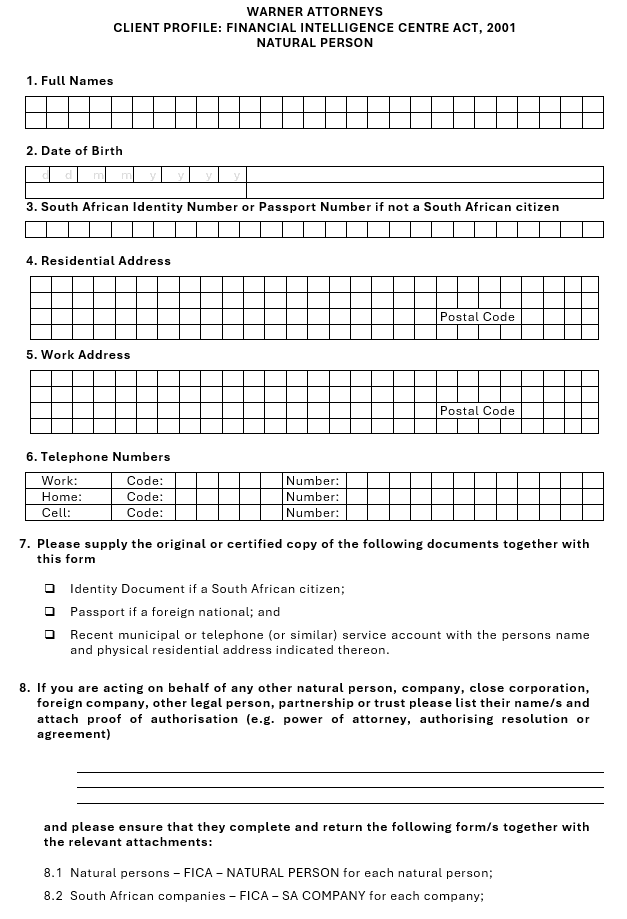
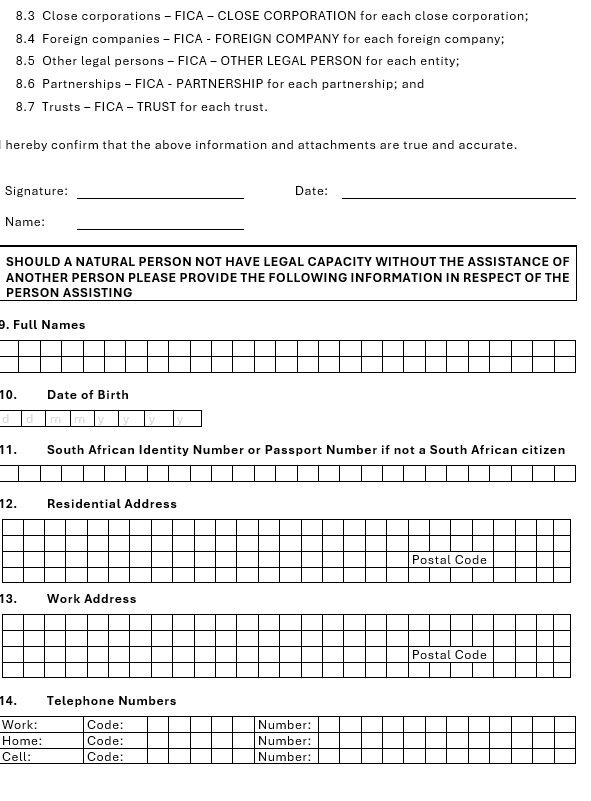
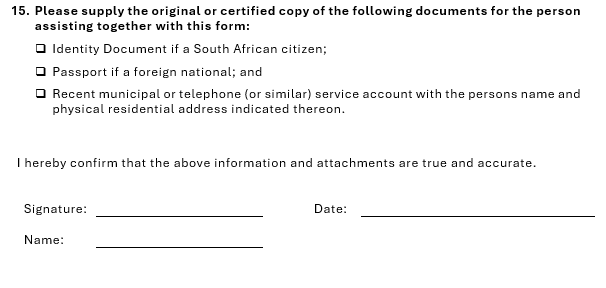
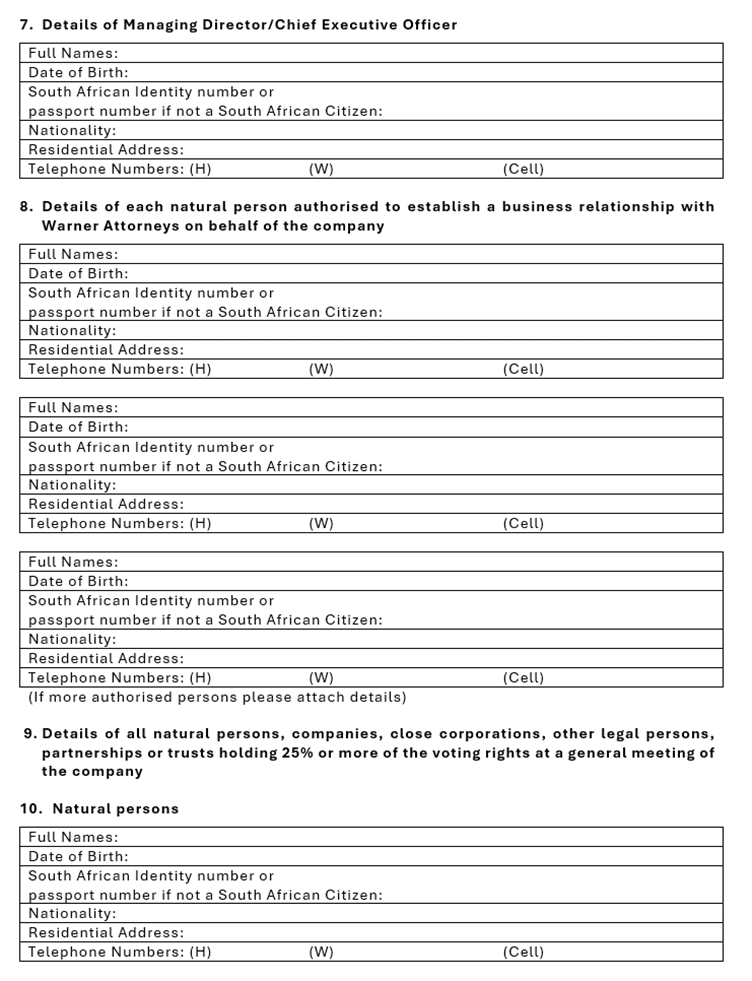
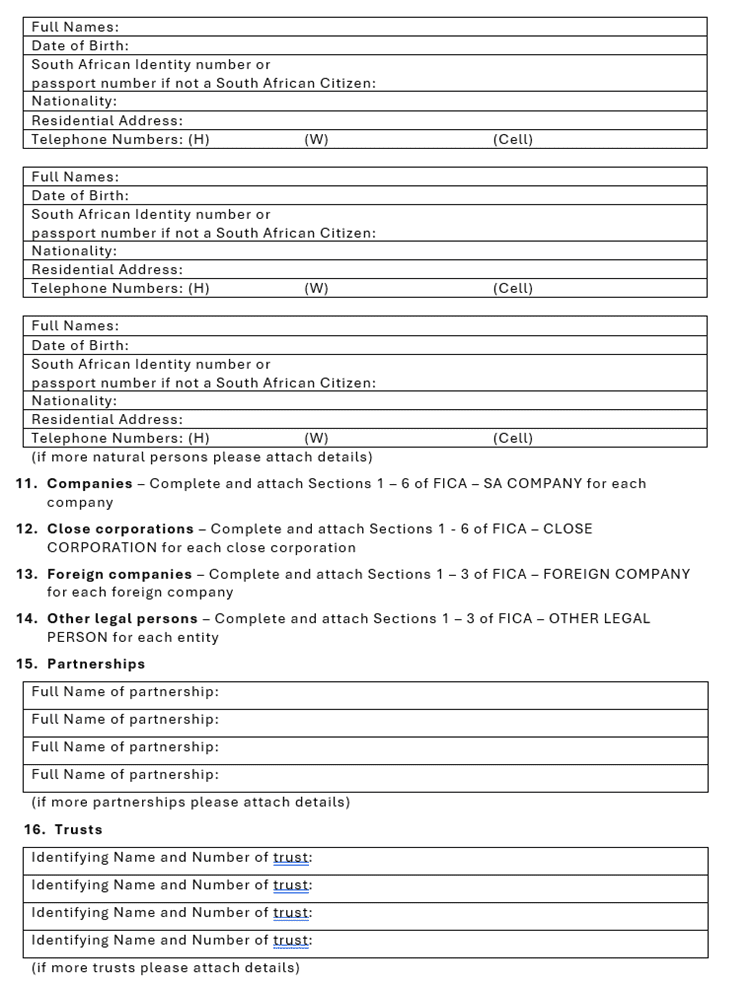
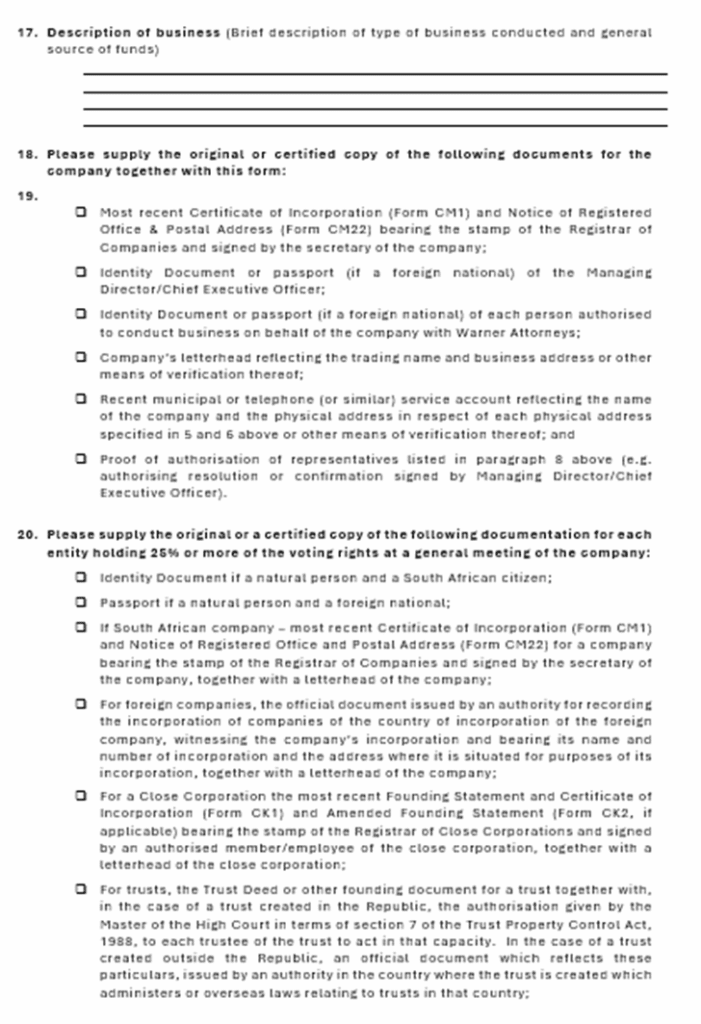
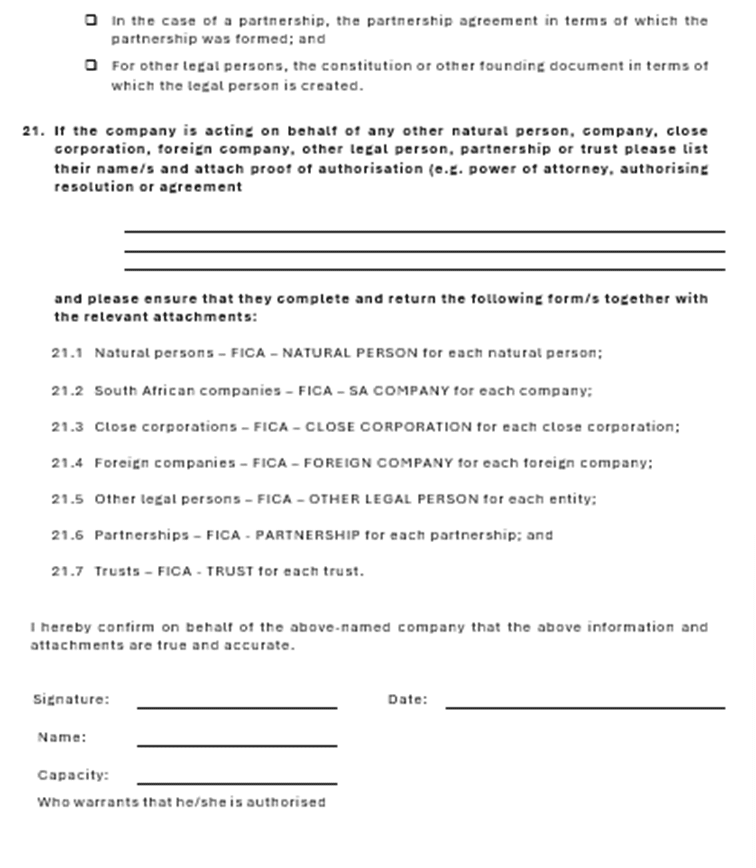
Client Fica Forms
- Natural Person
- SA Registered Private Company
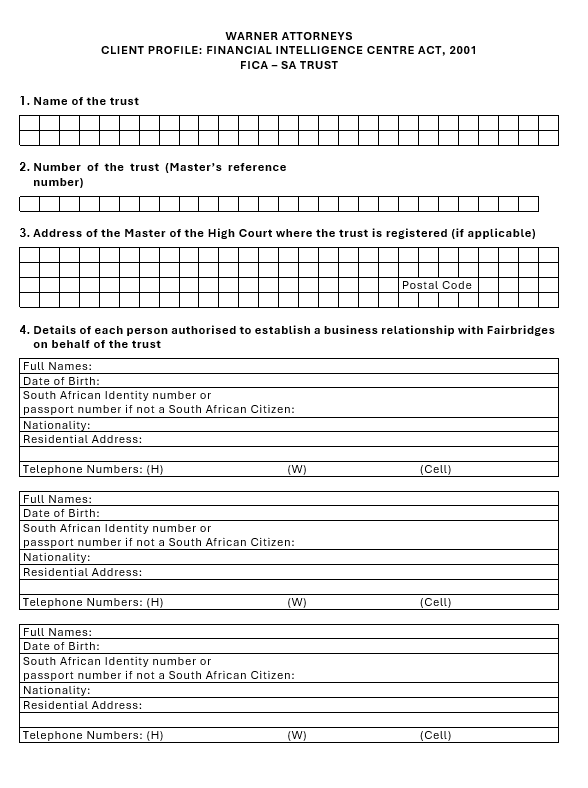
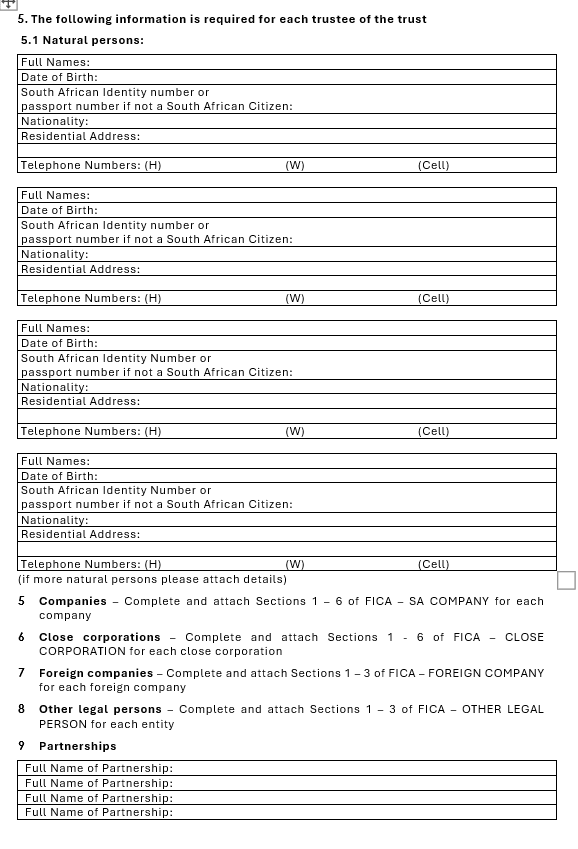
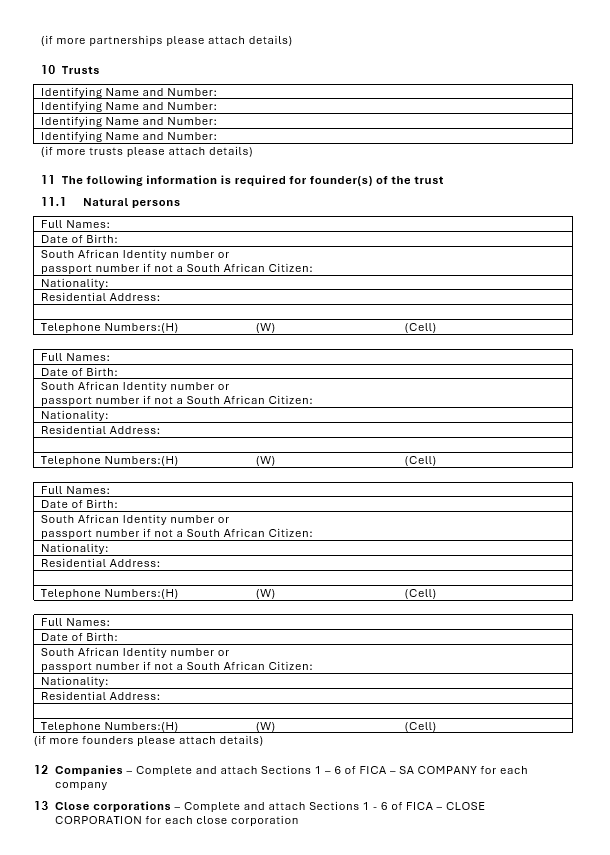
- SA Registered Trust
- Additional Forms to be used in the event that I get any of the following clients: Close Corporation, Partnership, Limited Liability Partnership, Foreign Company, Foreign Trust, SA Listed Company, Foreign Listed Company, Connected Persons, Other Legal Entity.



[1] Para 44 GUIDANCE NOTE 7A ON THE IMPLEMENTATION OF VARIOUS ASPECTS OF THE FINANCIAL INTELLIGENCE CENTRE ACT, 2001 (ACT 38 OF 2001)
[2] Para 45 GUIDANCE NOTE 7A